Shoulder Impingement
Focused treatment plans tailored to your specific needs at our clinic.
Shoulder Impingement: How Elite Performance Lab Manages Shoulder Pain in Athletes
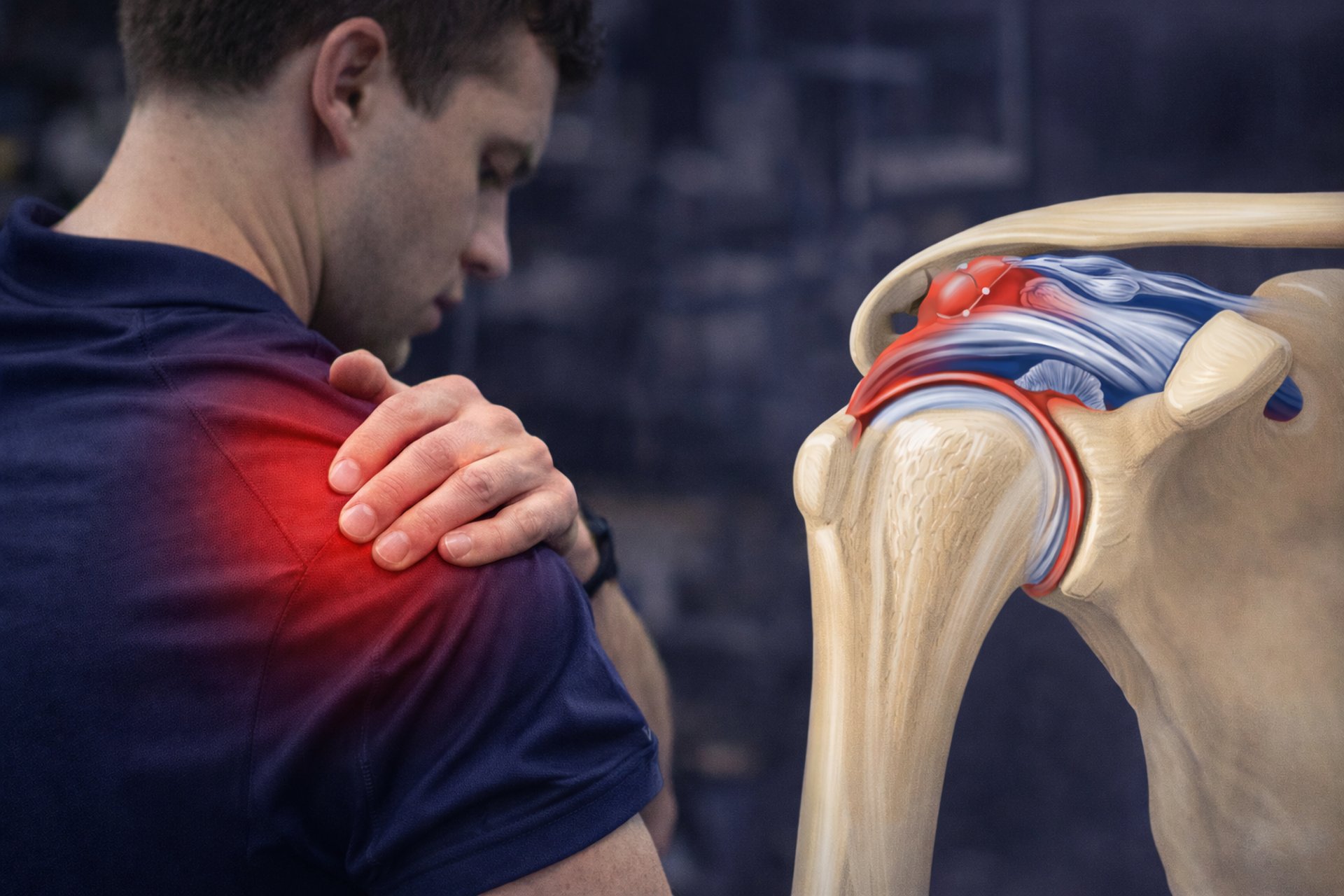
Shoulder impingement is one of the most common causes of shoulder pain in athletes, particularly those involved in overhead sports such as baseball, hockey, swimming, and weight training. While often described as a simple mechanical issue where structures in the shoulder “pinch” during movement, shoulder impingement is rarely an isolated shoulder problem. At Elite Performance Lab, we approach shoulder impingement as a capacity, movement, and workload management issue rather than a diagnosis that exists in isolation.
Successful management requires more than rest, stretching, or temporary symptom relief. It requires a structured, integrated approach that aligns clinical care, training exposure, and return-to-play decision-making within the athlete’s real performance environment.
Understanding Shoulder Impingement in Athletes
Shoulder impingement occurs when structures within the shoulder—most commonly the rotator cuff tendons or bursa—are repeatedly irritated during arm elevation or overhead activity. Athletes may experience pain during throwing, lifting, pressing, or reaching movements, often accompanied by reduced strength, stiffness, or loss of confidence in the shoulder.
In athletic populations, impingement is rarely caused by a single structural abnormality. More often, it develops when the shoulder is exposed to repeated overhead demands without adequate movement control, strength, or recovery capacity. Over time, this mismatch between workload and tissue tolerance leads to pain, altered mechanics, and declining performance.
Why Shoulder Impingement Persists in Athletes
One of the reasons shoulder impingement becomes chronic is that treatment is frequently focused only on the shoulder itself. Ice, rest, anti-inflammatories, or isolated rotator cuff exercises may reduce symptoms temporarily, but they do not address why the shoulder is being overloaded in the first place.
Common contributors include:
Limited thoracic spine mobility affecting overhead mechanics
Poor scapular control or endurance
Weakness or poor deceleration capacity of the rotator cuff
Inefficient force transfer from the lower body and trunk
Excessive overhead volume or sudden workload spikes
Inadequate recovery between sessions
At Elite Performance Lab, we recognize that shoulder impingement is rarely a local issue. It is a system problem that must be addressed through an integrated approach.
The Elite Performance Lab Approach to Shoulder Impingement
Elite Performance Lab was built to manage injuries like shoulder impingement within performance facilities rather than disconnected clinical settings. Our integrated rehab-to-performance framework ensures that rehabilitation, training, and return-to-play progress together under one system.
Comprehensive Assessment Beyond the Shoulder
Every shoulder impingement case begins with a thorough assessment that extends beyond the shoulder joint. While local shoulder evaluation is important, our goal is to identify the contributors that increase stress on the shoulder during sport and training.
Assessment includes evaluation of:
Shoulder range of motion and joint mechanics
Rotator cuff strength and endurance
Scapular control and coordination
Thoracic spine mobility and trunk rotation
Lower body strength and force transfer
Sport-specific movement patterns
Training and throwing or lifting workload history
This system-level assessment allows us to identify why the shoulder is being overloaded and how to reduce stress while maintaining performance exposure.
Strategic Clinical Care
Clinical care at Elite Performance Lab is used strategically to support movement quality, tissue tolerance, and progression through training. Interventions such as chiropractic adjustments, soft tissue therapy, acupuncture, cupping, and other modalities are applied based on assessment findings and current training demands.
The goal of treatment is not simply to reduce pain, but to restore the athlete’s ability to move and load the shoulder effectively. Care is adjusted as the athlete progresses, ensuring that improvements transfer into real-world training and competition.
Because EPL operates inside performance facilities, clinicians can observe how athletes throw, lift, and train, allowing treatment decisions to reflect actual sport demands rather than isolated clinical testing.
Building Shoulder Capacity and Control
Pain reduction alone does not prepare an athlete to return to overhead activity. At Elite Performance Lab, rehabilitation quickly transitions into capacity building, focusing on strength, endurance, and control of the shoulder complex.
This phase emphasizes:
Progressive rotator cuff loading
Scapular strength and endurance
Integration of shoulder loading within full-body movements
Gradual exposure to overhead and sport-specific demands
By rebuilding capacity rather than avoiding load indefinitely, athletes develop resilience that supports long-term performance and reduces recurrence.
Integration With Training and Workload Management
Shoulder impingement frequently flares when athletes return to overhead activity without proper workload management. For this reason, workload progression is a central component of our approach.
Training modifications are made collaboratively with coaches and athletes to allow continued participation where appropriate while managing stress on the shoulder. This prevents deconditioning and maintains overall performance capacity during rehabilitation.
Because rehabilitation occurs within the training environment, communication is immediate and aligned, reducing conflicting advice and unnecessary shutdowns.
Shoulder Impingement in Overhead Athletes
Overhead athletes place unique demands on the shoulder. Repetitive throwing, shooting, or lifting requires precise coordination between the shoulder, trunk, and lower body. When one link in this chain underperforms, the shoulder often compensates.
At Elite Performance Lab, shoulder impingement management reflects the athlete’s sport, position, and training demands. Return-to-play decisions are based on objective capacity benchmarks rather than time-based timelines alone.
Who This Approach Is Designed For
The Elite Performance Lab shoulder impingement framework is designed for:
Baseball and overhead athletes
Hockey players and rotational sport athletes
Strength training athletes with shoulder pain
Athletes with recurring or persistent shoulder symptoms
Individuals returning from periods of high overhead volume
Our approach is scalable across youth, collegiate, and professional settings.
Why Integration Improves Outcomes
When shoulder impingement is treated in isolation, athletes often cycle through short-term relief and symptom recurrence. By embedding clinical care directly into performance facilities, Elite Performance Lab ensures that rehabilitation, training, and return-to-play decisions operate as one system.
This integration leads to better outcomes for athletes and creates operational value for facilities by keeping athletes engaged, progressing, and confident in their care.
The Bigger Picture
Shoulder impingement is not simply a shoulder problem—it is a sign that movement capacity, workload, and recovery are misaligned. Addressing it effectively requires a system that considers the entire athlete rather than focusing solely on the painful area.
At Elite Performance Lab, we manage shoulder impingement through a structured, integrated framework that prioritizes assessment, capacity building, and performance-driven return-to-play. This approach allows athletes to resolve symptoms while building resilience that supports long-term performance.
FAQs
What conditions treated?
We focus on one condition per page to provide detailed care information.
How to book appointment?
You can call our clinic or use the online form to schedule your visit.
What treatments are offered?
Treatments vary by condition but include personalized plans tailored to your needs.
Is insurance accepted?
Yes, we accept most major insurance providers for covered treatments.
How long is each session?
Sessions typically last between 30 to 60 minutes depending on treatment.
What should I bring to my appointment?
Please bring your ID, insurance card, and any relevant medical records or notes.
Get in touch
Contact
Reach out for appointments and inquiries
© 2025 Elite Performance Lab Inc. All rights reserved.