
The Truth About Mobility Work: Why Most Athletes Are Doing It Wrong
Why stretching more isn’t the answer. Learn the difference between passive and usable mobility, and how to train range of motion that actually transfers to sport.
MOBILITY
Dr. Ryan Faubert
1/25/20262 min read


Understanding Mobility: Passive vs. Usable Range of Motion
Most athletes think mobility means stretching more. That’s where the problem starts.
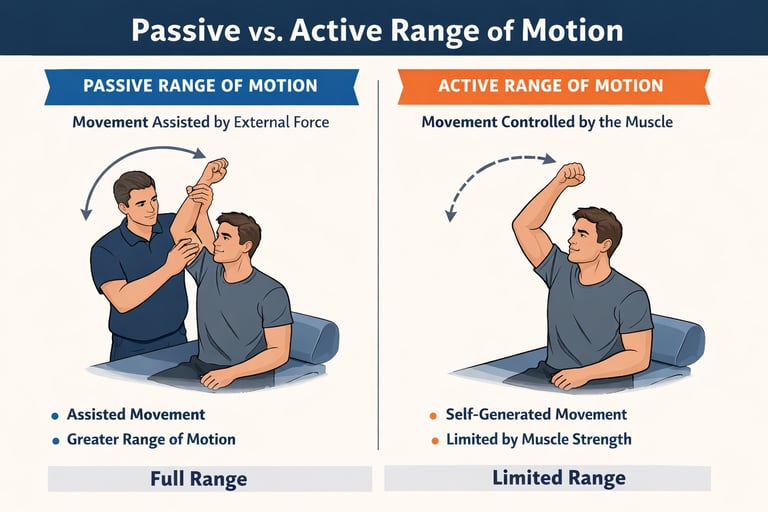
There’s a critical difference between passive range of motion and usable range of motion, and confusing the two is why many athletes feel “mobile” but still get injured or underperform. Passive range of motion refers to how far a joint can move when external force is applied, such as stretching or assisted movement. Many athletes can demonstrate impressive flexibility in these settings, which often leads to the false assumption that they are prepared for sport.
Usable range of motion is different. It’s the range an athlete can actively control, load, and reproduce under speed and resistance. This is the range that matters on the field, ice, or court. If an athlete can stretch into a position but cannot control it during dynamic movement, that range is not usable and often becomes a liability under load.
This is where traditional mobility routines fall short. An athlete may stretch daily and still struggle with movements like an overhead squat, sprint mechanics, or deceleration. The issue isn’t a lack of flexibility — it’s a lack of control, strength, and coordination within that range. Mobility that doesn’t transfer to sport doesn’t protect athletes or improve performance.
The Importance of Context in Mobility Training
Mobility work without context rarely carries over to sport.
Every sport places different demands on the body, and mobility should reflect that. A pitcher, a hockey player, and a weightlifter do not need the same ranges, speeds, or control strategies. Performing generic mobility drills without considering how an athlete trains or competes often leads to wasted time and limited return.
Load matters just as much as range. Mobility developed without resistance or sport-specific positions often disappears once intensity increases. If an athlete cannot access range under load, that range will not be available during competition. Effective mobility work must reflect the positions, forces, and speeds the athlete actually encounters.
Integrating Mobility into Training and Rehabilitation
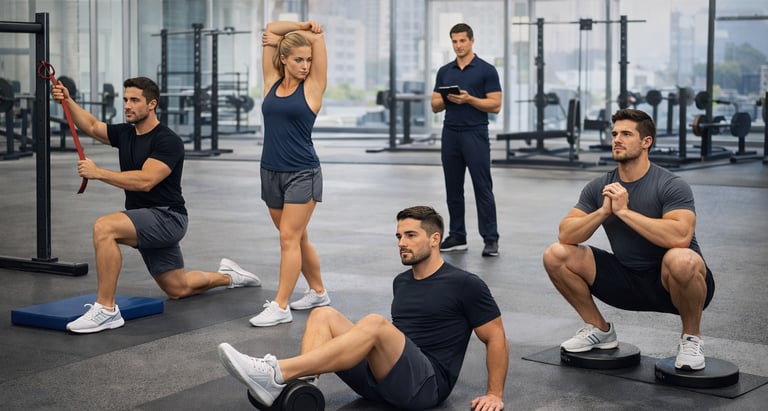
At Elite Performance Lab, mobility is not treated as a standalone routine. It is integrated directly into rehabilitation, strength training, and return-to-play progressions.
Mobility work is introduced where it matters most: during warm-ups, within strength exercises, and throughout progressive loading phases. This ensures that new range is not only gained, but maintained and expressed during real movement. Mobility is paired with strength and control so athletes can use it when it counts.
Rather than prescribing the same mobility drills to every athlete, mobility strategies are individualized based on assessment findings, sport demands, and training exposure. This approach ensures mobility supports performance instead of existing in isolation.
The Takeaway
Mobility is not about how far you can stretch, it’s about how well you can control range under load. When mobility is trained without context, strength, or progression, it rarely transfers to sport. When it’s integrated properly, it becomes a powerful tool for performance and injury resilience.
Get in touch
Contact
Reach out for appointments and inquiries
© 2025 Elite Performance Lab Inc. All rights reserved.